The King's Highway: Paul's Journey Through Time and Faith

Updated: Sep 15
The King's Highway runs from Damascus in modern day Syria to Aqaba in modern day Jordan. It is one of the oldest trade routes in the world. This is the road that Moses asked the Edomites to use on his wilderness journey with the Israelites. And it is the same road that Elijah utilized as well. The King’s Highway is widely considered by scholars as the most logical route that Paul would have taken from Damascus into Arabah or Arabia.

As a pupil of Gamliel, Paul would have understood the significance of the layers of Jewish history he would have encountered in the landscape. [Num. 21/22, Deut. 2:27, Gal. 1, Acts 9] We have little detail of Paul’s activities during his three years in Arabia, but the desert of the Jordan rift must have acted as a pop-up history book that illumined Paul’s understanding and opened his eyes to prophetic fulfillment as he traveled south from Damascus. Theologians and historians suggest Paul may have engaged in prayer, and reexamined his extensive Pharisaic training. In his biography of Paul, N.T. Wright makes the compelling case that Paul traveled to Mt. Sinai. This would be significant as this is where prophets of old such as Moses and Elijah received instruction and spiritual preparation. Paul explains on several occasions that he received direct revelation concerning the truth, and it makes sense that he could have received this at har bet Yahweh, the mountain of the Lord.

Paul likely wrestled with several topics as he passed by the Jabbok River, reflecting on his forefather Jacob. As a zealot, Paul must have reflected on the atonement of Phineas in the Moabite desert (Num. 25/Psalm 106:28-31,) and how it relates to the Mosaic Law and to First Temple theology. He must have pondered the nuanced explanations of the First Temple per the words of the Deuteronomist versus the Chronicleer. Paul must have asked for clarity regarding theology as presented by current Jerusalem leadership versus pre-exile.

The community of Essenes in Qumran, many of whom were temple priests, moved from Jerusalem to the Dead Sea Basin in protest. The sect must have been of great interest to Paul given their connections to Jerusalem, the Temple, and even Damascus. The Damascus scroll was found in Qumran, with an admonishment to the sect in Damascus to remain faithful in the New Covenant (Jer. 31:31-24,) and to reject the corrupt leadership of Jerusalem. There are several verbatim translations and phrases of interest when comparing the language of the Dead Sea Scrolls to Paul’s letters. Here are a few examples:

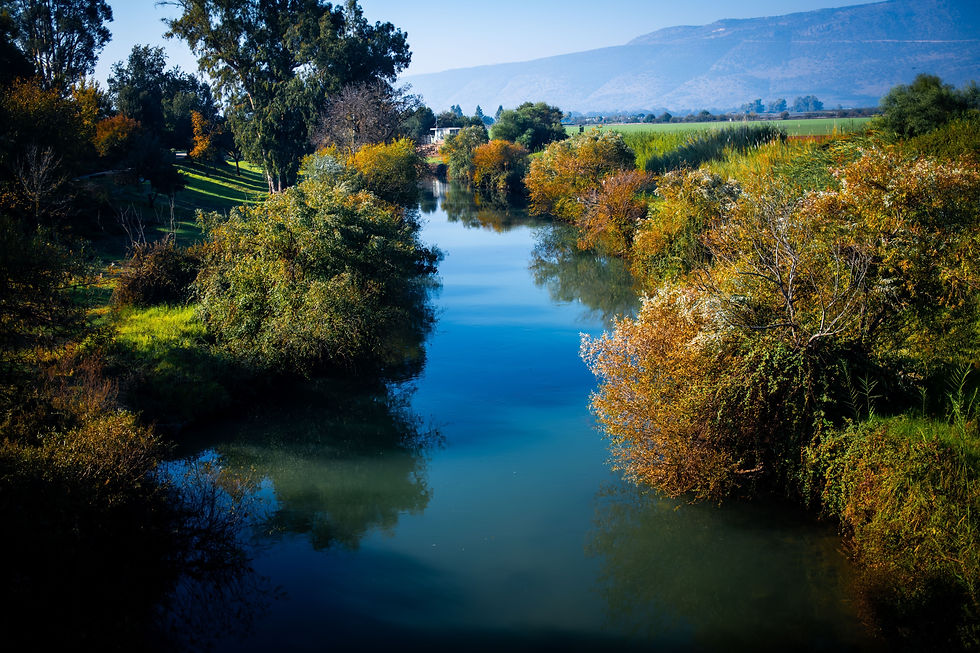
Paul's must have reflected on Abraham and the significance of Melchizedek’s covenant meal as he gazed towards Salem from Mt. Nebo with Moses. He likely gained deeper insight into the ritualistic use of living water when crossing the river Jordan with Joshua, Elijah, Elisha, John and Jesus. It is also likely, that Paul continued south to the land of the Edomites, inhabited by King Aretas and the Nabateans in the days of Paul. En route Petra, it is likely Paul passed by Machaerus, the site of John the Baptist’s martyrdom, under the auspice of Herod Antipas at the time Paul walked-on-by.

In Galatians 1:15-16, Paul explicitly states that God called him to "preach him among the Gentiles". If Paul wanted to immediately obey this mandate, retreating to an isolated, empty desert at Mt. Sinai makes less sense than traveling to Wadi Musa (Valley of Moses), synonymous with Petra as aptly named by the Romans. Wadi Musa was a populated, cosmopolitan hub of international trade filled with non-Jewish “Gentiles”, with an interesting connection to the Diaspora per Talmudic and apocryphal scriptures. Paul was a tentmaker, and Petra sat on a massive spice route where tent-making and leather-working were in high demand. This environment also matches Paul's lifelong strategy of working a trade in busy marketplaces to fund his street preaching, but this is mere speculation.

We don’t know for certain how Paul spent his time in Arabia, whether in isolation or preaching to various groups like Essenes, Nabateans, and Gentiles. But we have the opportunity to trace this journey with Paul, and re-think, as he did, our understanding. We can seek and receive knowledge as he did. And we can grow through Wisdom in understanding the mysteries of our faith. There is no better classroom than the locations in Israel and Jordan that still resonate the knowing contained in the ancient scrolls written there.
It’s been six years of travel challenges in-terms of pestilences and war throughout the world, including Israel, and the greater region. We are all in need of Shabbat so we can focus our hearts on Divine Truth.
"For my thoughts are not your thoughts,
nor are your ways my ways, says the Lord.
For as the heavens are higher than the earth,
so are my ways higher than your ways
and my thoughts than your thoughts.”
— Isaiah 55